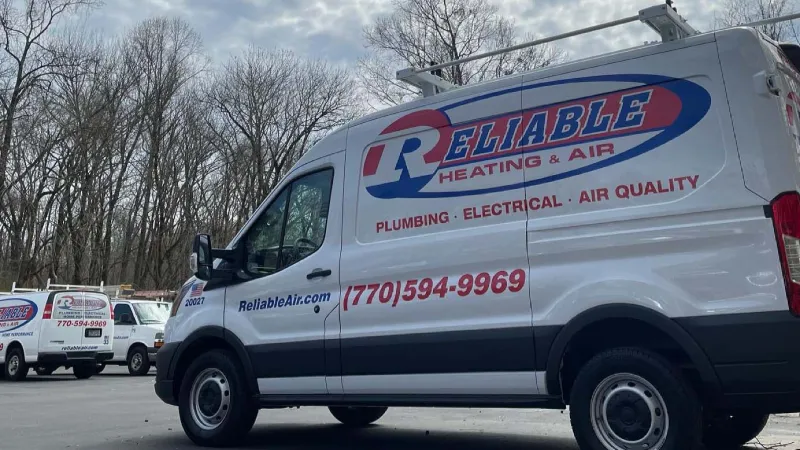
Reliable Heating, Air & Plumbing along with Trane have partnered to bring a never before offered financing plan to their customers. Same as cash no interest financing offers have been around for years, but they usually are for only 12 or 18 months and they have always accrued interest that was due and payable if a payment was one day late! Kinda a “got you” clause that in the past kept many from using these handy payment plans. If every payment was on time, they were a great tool to pay for a new heating & cooling system or a water heater over an extended period with no extra cost added on. But the downside of these offers was that if one did miss a payment, the “same as cash” aspect was stopped and interest was due back to the first day and the interest was always very high. You would end paying considerably more for the product. Not anymore with this new offer from Trane and Reliable Heating, Air & Plumbing. The new program, in which the consumer gets 60 months O% APR with no interest building up or accruing and if they are late on a payment, they aren’t penalized for the interest on they whole loan amount. If fact, they only get charged a small “late fee”. You can actually get up to 59 days late until you are penalized with additional costs other than the small late fee. This a great plan as it allow one 5 years to pay for a new Trane system that can cut utility cost in half or more. This actually allows the small monthly payments to be made by the savings generated by the new system. This type of offer has never been offered before in the world of furnaces and air conditioners, only in the automobile business.
Archive for the ‘Saving Money’ Category
0% APR for 5 Years
Thursday, January 12th, 2012It’s not just “routine” maintenance this time of year.
Monday, October 3rd, 2011by Dan Jape of Reliable Heating, Air & Plumbing
Cold weather is right around the corner and you will soon be in need of heat in your home. Furnaces need a complete service and cleaning each year before they are turned on to make sure they are safe and efficient. Many times, a homeowner will make the assumption that just because a furnace ignites, it is safe to operate. This could not be farther from the truth. Modern day furnaces are a very safe appliance and when maintained, can give years of service. But it is important that the series of safety devices and components that make them safe are in good working order. All modern day furnaces are safe if they are maintained properly, but if neglected could cause a problem. Reliable Heating, Air & Plumbing employees 100 plus Nate certified techs to make sure all is in good shape for a long cold winter.
One of the most important items to check and clean is the heat exchanger. A furnace burns gas and heats up a metal box that contains the gas burners and when the box is warm, a fan blows air across the outside of the box and transfer heat to the air stream, which is then distributed to all the rooms of a home. This heat exchanger heats and cools thousands of times a year and this causes expansion and contraction. This can cause metal fatigue and cracks in this burner box which allows carbon monoxide to leak into the air stream. We have long optical scopes that can be inserted into a heat exchanger to check for cracks and fatigue to make sure they are airtight. This is extremely important to be checked every year, as this piece is a very stressed component of the furnace and can fail at any time a furnace is over 10 to 12 years old. It is also very important that any rust and debris that accumulates in the heat exchanger is vacuumed out to allow all the heat generated by the combustion of the gas to be properly transferred to the air stream.
Another very important series of devices that need to be checked are high temperature limit switches which monitor a furnace for an overheated condition. These high limits are crucial in making a furnace safe and they need to be checked and tested each year to make sure they operate correctly. If a fan or blower stops operating on a furnace, the gas will continue to ignite until these limit devices sense the furnace is overheated and shut off the burners and turn the furnace off. These limit switches are directly in the air stream and take a lot of abuse and they fail after a number of years.
Furnaces have a device that moves air and fumes through the heat exchanger and it is often a component that needs service in a modern furnace. This “draft inducer” is in the combustion stream of the furnace and is exposed to the hot, acid laden fumes of the by-products of gas combustion. Some manufactures make the housing of these inducers out of plastic and they become so hot, the plastic housing cracks allowing flue gases to be emitted into the living space of a home. Some early models also used metal housings and fan blades that was not built out of corrosive resistant materials and they rusted out quickly. These units need to checked at the start of every season for proper operation and integrity of the housing. A complete and through inspection on all the controls on a furnace have to checked every year to assure one all is working properly on their gas furnace.
A gas furnace that a builder installs in your home can give you 14 to 18 years of service if they are taken care of properly and serviced regularly. A furnace that a consumer purchases can last 20+ years and provide safe efficient heat if properly maintained. Have your local heating and air contractor check for correct operation and your family should be warm and safe this winter. If you are need of a new furnace, they start out as low as $1495 and can go up to $3500 for a top of the line model.
When it’s time, it’s time!
Friday, June 17th, 2011by Dan Jape of Reliable Heating & Air
When it’s finally time to replace your old heating and cooling system, there will be many choices and different decisions to be made that will affect your comfort, efficiency and overall happiness with any new system selected. It would benefit anyone to become familiar with the different components and terms you will face when that day does arrive.
There are 3 separate pieces of equipment you have to replace when purchasing a new HVAC system and they are the furnace, the indoor cooling coil, and the outdoor condenser or air conditioner. You have choices of different furnaces and condensers, but generally there is only one coil for any system.
There are many different manufacturers of furnaces and many different models available, but there are really just two distinctly different types of furnaces, single speed, single stage furnaces and two stage, variable speed furnaces. A single speed single stage furnace comes on full blast anytime it runs and the motor in it consumes $250 a year of A/C electricity. A two stage variable speed furnaces comes on gradually and only uses the amount of gas needed at any given time to heat your home and it’s blower consumes only $30 annually of D/C current. The Variable Speed furnace also comes with a special thermostat that actually allows the furnace to reduce the amount of humidity in your home by an additional 5 to 10%, and when it is drier in your home, you can actually keep it warmer and feel the same comfort level, which will save you money.
You have many choices in different outdoor condensers and what you pick is critical in your comfort. There are two different types of outdoor units, single speed units and two speed units. The two speed units are the best choice for most homes in the south, as they can be large enough in capacity to handle the extreme hot days, but because of their two speed design, they slow down to remove more moisture than a regular single speed condenser. The efficiency of these two speed units is usually so much better than a single speed unit that they can reduce the electric consumption by over 50% compared to your old cooling system you have in place now.
There are “builder grade units”, consumer grade units and top of the line units in both single speed and two speed. Builder grade units are units designed for a low, upfront price point and come with short warranties and will usually provide a shorter life span, as most builders are only interested in how a particular appliance operates for one year, which is the standard warranty a new home comes with.
Consumer grade units today come with a 10 year parts warranty and some companies offer a 10 year labor warranty or even a lifetime warranty if properly maintained. Units such as these can last 18 to 20 years often times and are available up to 16 seer in most cases.
Top of the line air conditioners are loaded with safeties and controls that allow them to last 20+ years and cut operating costs up to 60% while doing the best job in dehumidification and cooling and come in single speed, two speed single compressors, two speed twin compressors and even solar powered. Units such as these are more expensive up front, but are a better investment in the long run, by offering superior operation, efficiency and comfort.
It helps in any market place to know about the different products that are available and it is always a good idea to get at least 3 different estimates to see if there is a general consensus to what each company recommends.
Reliable Heating & Air Summer 2011
Monday, May 16th, 2011Dan Jape, Reliable Heating & Air
Now that warm weather has arrived, it is very important that your cooling system is checked to make sure it is operating at peak efficiency. If your system is low on refrigerant or coils are dirty, it can cost you hundreds of dollars more each year to cool your home. Make sure you do not waste your money operating a cooling system that is not operating at peak efficiency.
Most HVAC companies offer a service contract which provides two visits a year to clean and tune up your heating and cooling systems and the summer inspection should include cleaning the outdoor unit of mud and debris lodged in the outdoor coil. This cleaning helps a unit give the best efficiency possible. It is always best to sign a service agreement with your company, as it gives your priority treatment during peak times and a discount on parts. At Reliable, we offer a lifetime warranty on most parts if a service agreement is put into effect at time of repair. If that same problem or part ever fails again, we fix it for free, no questions asked.
There are some big changes in the HVAC business brought about by the passage of the new Georgia State Energy Code, which goes in effect this year. It calls for some new tough policies regarding the heating and cooling systems that are installed in new homes.
Blower door tests are now required on all new homes to check the infiltration rate of a new home. The result must be less than 7 air changes per hour at 50 Pascals . Companies such as Reliable Heating & Air are required to have a DET certified specialist on staff to check the tightness of the duct systems and the thermal envelope of the structure. Duct leakage now has to be tested and certified to meet the new standard for tightness. Duct mastic has to be used to seal ducts to make sure they are tight and not leaking conditioned air.
Programmable thermostats are required with every system as are attic tents or covers over the attic staircases. Attic vent fans can no longer be installed in a new home unless they are solar powered. Electric furnaces cannot be installed in any new homes after January 1, 2011. A heat pump must be installed as the primary heat source if natural gas or propane is not used.
There are many other facets of this new energy code, but these are some of the highlights that might affect your HVAC system in the future.
For over 33 years, Reliable Heating & Air has been known as the company to trust for all your heating and cooling needs, providing top quality service at affordable prices. Many times, our customers have looked to us for referrals to handle their plumbing needs also since they have always felt a high level of trust and satisfaction from conducting business with Reliable. We have searched for many years for the right plumber who gave the same great service experience we like to provide our customers and have never been able to give a recommendation without worrying about the outcome. We are now proud to announce we have opened up a plumbing division offering the same great pricing and helpful cheerful service our customers have always had counted on for their heating and cooling needs and we guarantee 100% customer satisfaction. Call us today for any plumbing or heating and cooling needs.
Dan Jape, Owner – Reliable Heating & Air
Spring Cleanup List Begins with HVAC
Monday, April 18th, 2011Courtesy of HGTV.com
To keep your house in top shape, give systems an annual checkup.
Spring cleaning is a tradition, but there are some other chores that should be part of your springtime routine, too. Most of them take only a few minutes, so get started!
1. Check your air-conditioning and heating equipment before the beginning of a new season.

2. Check and replace your furnace and air-conditioning filters every month. There are several types from which to choose, depending on your needs. Fiberglass filters last only one month, while the filters typically last three to four months. HEPA filters last up to six months and can be cleaned with a vacuum nozzle.
3. Most air conditioners have a drainage hole on the base of the cabinet, beneath the evaporator fins. This hole needs to be kept clear in order for the air conditioner to work properly. It’s a good idea each spring to use a paper clip or wire to poke through the hole and clear it.
4. To keep a dehumidifier working properly, remove its housing and let the unit dry completely. Vacuum every accessible surface and crevice.
5. Clean your bathroom fans once a year. Take the cover off, wash it in soapy water and clean dirt off the fan blades with a toothbrush. Be sure the power is off when you do this!
6. Check the flappers on your toilets at least once a year. If they are showing their age, replace them before they start leaking and wasting water.
7. Remove all faucet handles and clean their insides to keep the screws from corroding. Use a rust remover if necessary.
8. Replace the batteries in smoke and carbon-monoxide detectors twice a year: when the time changes to daylight savings time and then back to standard time. While you’re at it, dust or vacuum the detectors to keep them working at peak performance.
9. Make sure you have a fully charged fire extinguisher that you can reach quickly and easily.
10. Inspect and, if necessary, caulk around your home’s windows and doors annually. That will help keep out heat and humidity in the summer and cold drafts in the winter—and save money on your utility bills all year round.
11. Open and close all windows. Do they all open easily, yet close tightly? If not, check the weather stripping. There are a number of different types to consider.
12. The best time to caulk a joint outdoors is during the spring or fall. That’s when the width of the joint is halfway between its seasonal extremes. A plastic drinking straw or a length of plastic tubing makes a handy extension tube for caulking hard-to-reach places. Secure the extender with duct tape.
13. To really clear and clean screens for springtime, rub them with kerosene on both sides, then rinse with soap and water. Kerosene fumes are dangerous, so make sure to do this outside or in a well-ventilated area.
14. To fix a small hole in a window or door screen, dab clear household cement over the hole with a toothpick. If the screens are plastic, test the cement on a scrap to make sure it won’t melt the material.
15. Use the same technique to repair screen tears. Pull the two halves of the tear together and hold them in place with masking tape on one side. Apply the household cement to the tear, then smooth with a putty knife. When it’s dry, gently remove the tape and apply cement to the other side.
16. Clean out the gutters of winter debris and check them for damage from ice. Install gutter screens or protectors to help keep debris out of the gutters.
17. If a roof gutter is sagging, pitch it back to a level position by tightening its strap with pliers. The tighter the strap is twisted, the more the gutter will rise.
18. Be sure the gutters slope properly toward the down-spouts.
19. To prevent basement flooding, make sure there is at least three feet between the side of the house and the down-spout’s outlet. Use one of the following methods to reach that distance:
- Add an elbow for pipe and extension, although that often leaves the outlet still too close to the house.
- Use a splash guard that stretches about three feet.
- Attach a flexible extension hose to the end of the down-spout and bend it in away from the house.
20. To prevent foundation erosion as well as basement flooding, build up soil around the house and slope it away from the foundation.
-For more home improvement tips and money-saving ideas, visit HGTV.com
-Dan Jape
12 Months of Giving
Tuesday, March 8th, 2011by Dan Jape – Reliable Heating & Air
Do you know a family in need of a replacement heating & air conditioning system? Perhaps a friend, family member or co-worker that has fallen on hard times and is going without heating or cooling?
Submit your story of a family in need & once a month, Reliable Heating & Air will select a winner who will receive a complete 13 SEER comfort system (heating & cooling).
Visit the 12 Months of Giving page to submit an entry.
Winners will be announced at the end of each month.
The following restrictions apply
Employees affiliates and family of Reliable Heating & Air and WSB are ineligible. Free system includes the following equipment: 80% afue single stage furnace, 13 SEER a/c, matching cooling coil and digital thermostat only, all labor and installation supplies. 1.5 ton to 5 ton system only. Nominee’s equipment must be verified by Reliable Heating & Air technician as inoperable and beyond repair. We reserve the right to verify and and all information submitted for accuracy. Nominees must be Georgia residents as we are only licensed in Georgia. Other restrictions may apply based on type of dwelling.
Home Automation Made Affordable and Easy
Wednesday, November 10th, 2010by Dan Jape of Reliable Heating & Air
There is an exciting new Trane product we have available that will allow you to put control of your home in the palm of your hand and provide total comfort and total security from any remote location. The “LiNK” system allows you to monitor and remotely control the temperatures and energy efficiency of your home as well as controlling the door locks, security lights and even turn on cameras that show you what is happening in your home. Many different systems in your home can be controlled from your web enabled phone or laptop computer. Two hundred and thirty-one different systems can be connected to the LiNK system and all you need is an internet connection.
Controlling and monitoring you homes heating and cooling system has many uses. I never know when I will get home on any given day, so a programmable thermostat is useless for my lifestyle. LiNK allow me to adjust my temperatures when I am on my way home so my comfort level is already where I like it before I get there. LiNK will send me an alert if my home gets too hot or too cold, possibly alerting me to a problem with my system.
One of the most exciting aspects of the LiNK system you will enjoy the most is the ability to have wireless camera’s pointed at your front door and throughout your home that will show you real time pictures of who just entered your home and what is actually taking place even though you might be out of town. The LiNk system can be programmed to allow select people in your home at certain times and not others and keep a 90 day record of when and who came in and out. This could be very useful for cleaning services, exterminators etc. It would also be very handy to know when your teenagers come home and who was with them. I will occasionally get a call from my security company that I had an alarm go off and I do not know if it was a false alarm or a real emergency. So far, thank goodness, all have been false alarms, but the drive home to check it out is a very tense trip I would rather not have to make. LiNK would allow you to verify to the police that you have had a real break in and need them to actually respond.
You can remotely turn off and on lighting and open and close your garage door in addition to many other uses. You can even program your system to work in concert when you arrive from work, push a button and the garage door will open, your entryways will light up, your security system will recognize you, and your front door will unlock. LiNK can have your favorite music playing for you when you get home and while you were away, LiNK can make sure the lawn sprinkler watered your lawn on schedule. If it had rained, you could have bypassed the sprinkler system from work.
The great thing about this system is it is modular and you can slowly but surely add new devices as you find you need them and as long as they are Z-Wave compatible devices, the sky is the limit. And the best part is the system is very affordable!
Call us today (770-594-9969) to learn more about this exciting new way of controlling your home.
Heating & Cooling Tax Credits will Expire Soon
Wednesday, October 13th, 2010by Dan Jape of Reliable Heating & Air
Two years ago when the tax credit program started, December 31, 2010 seemed so far down the road it would never come. Well, here we are at the end of one of the best deals we have seen and there is only a few months left to take advantage of the $1500 credit that has allowed millions of homeowners to replace old inefficient heating and cooling systems. There have been many negative reports in the media about the stimulus plan and its success or failure has been debated to death by the press and talk radio, but the positive side of this bill is the impact it has had on every average homeowner who had old worn out heating and cooling systems that needed upgraded. These people have been able to purchase top of the line super high efficiency heating and cooling systems for the same price as an entry level system. A very nice added feature to these new systems is a special thermostat that not only controls temperature but also controls and removes more humidity than a regular system. The increased moisture removal makes one feel more comfortable at higher temperatures saving cooling dollars.
There are many new models and sizes available today that earn the tax credit and they give homeowners many more choices that were not open to them just a few months ago. Another positive side of this tax credit program is that all the different manufacturers of heating and cooling systems have advanced technology and efficiency to meet the government standards and these new models will be around for years after the credit program goes away in a few months. If you have not looked into the tax credit program, you should call your heating and cooling provider and at least explore this program as it ends December 31, 2010 and there is no extension or plans to extend this program, so do not miss this opportunity to cut your utility bills in half and increase your comfort by two fold.
The cold weather is here now and it is time to get your furnace checked for proper operation and safety. A properly adjusted furnace can save hundreds of dollars in cost of operation and make sure that your heating system is in top working order. Furnaces should be cleaned of rust and soot and have the heat exchanger inspected thoroughly each year. Gas pressure should be adjusted and the gas jets cleaned to assure proper operation and efficiency. Your air filter should be changed every 2 months and the blower wheel and assembly should be kept clean and free from dirt build up.
Another nice addition to your comfort system this season would be a central humidifier that adds moisture to your homes heating system. These units prevent damage to your homes hardwood floors, cabinets and furniture. They also prevent dry skin and static electricity and reduce the heating bills as it is more comfortable at a lower temperature when the moisture is increased. This is the opposite of the summer when comfort is increased with lower humidity.
Dump your pump and get a $1000 bump!
Tuesday, August 24th, 2010by Dan Jape of Reliable Heating & Air
There is an exciting new program from the gas company that will allow you to get a $1000 rebate and when combined with federal tax credits of $1500, earns a total of $2500 off the cost of a new heating and cooling system. This is almost half the cost of the entire system and when combined with the $1000 rebate now available from Trane, makes this the most lucrative time of the year to replace your old worn out furnace and air conditioner. This new program is called “Dump the Pump” .
The new program from the AGL, the local gas provider, gives you the chance to replace your old heat pump or dual fuel system with a new high efficiency gas furnace and air conditioner and get $1000 no strings attached. Many of these old heat pump dual fuel systems were installed in past years as a result of kickbacks paid to heating and air contractors or builders by the local electrical companies. Many of these systems were not installed or applied correctly and they have not given good service or comfort. The local gas company for most of metro Atlanta is AGL and they serve everyone except the city of Sugar Hill and city of Austell. If you have a marketer, such a Scana or Walton Gas you purchase your gas through AGL and can earn the rebate. This rebate is available only through a select few approved contractors chosen by AGL to perform these dual fuel replacements. While a heat pump can be a good choice for a basement, many times they do not work as well as a gas furnace as the primary heating system in existing older homes or homes without extensive insulation in the walls and attics. This $1000 rebate is a great opportunity to get rid of an old heat pump that never should have been installed in the first place.
Trane now has some very lucrative rebates and finance offers available through the end of November 2010 that will help reduce the cost of a replacement system even more. There are instant rebates of $200, $400 and even $1000 on 16, 17 and 20 seer systems. Or if you prefer, Trane will give you three year interest free financing to pay for a new comfort system as you enjoy the energy savings and comfort afforded you by modern day Energy Star systems. The 3 year program requires no down payment, so one can immediately start enjoying the comfort and savings aspect of this program without any initial outlay of resources. Many people have contacted us this past summer about high energy bills and air conditioners that cannot keep up with the extreme heat wave we have seen this year. This past winter, we also saw colder temperatures than I can remember and the cold snap went on and on for months. These new tax credit qualifying systems also save hundreds of dollars in gas cost and can improve the comfort level of any home.
Dump your Pump today and enjoy up to $3500 in true rebate and incentives that will help you long term to enjoy your most valued belonging, your home. Enjoy lower utility cost, improved comfort, and lower humidity levels today!
Is there trouble in the attic of your home?
Friday, July 9th, 2010by Dan Jape of Reliable Heating & Air
In the past two years, many homes in the Atlanta area have had new roofs installed due to the hail damage and storms that have hit us hard. With these new roofs came a very harmful side effect sold to the unsuspecting homeowner by roofing companies: a scorching hot attic. Most homes in Atlanta have a power assisted fan installed that exhausts hot air in the summer and keeps the temperature down in the attic which allows the air conditioning to work properly. The duct work in many homes is actually in the attic and by having proper ventilation, the air coming out of the vents can actually be 10 to 15 degrees cooler. Attics without these fans can approach 160 degrees in the middle of the afternoon.
The problem has come from the fact the majority of roofing companies have convinced the homeowner they no longer need power fans, instead replacing them with an inferior venting system called “ridge vents”. A ridge vent is simply a cap that goes over a hole cut along the peak of the roofing shingles. It is supposed to allow super heated air to naturally rise up and out the roof of your home through convection instead of using an electric fan to blow the air out of the roof. While some heat is exhausted, nowhere near as much is actually taken out of the attic when using a power fan and the result is a hot home and an air conditioner that has to run twice as long as it should under proper conditions. Also, the shingles can get too hot, shortening the life of the new roof. Roofers promote ridge vents because they have a high level of profit for the roofing companies, but this passive venting system does not do an adequate job for most homes in Atlanta. We see home after home that can’t cool to the level it used to before the change of the attic venting system. To make matters worse, there is much misinformation on the internet about attic ventilation which makes it more difficult to know what to believe.
There are power fans that mount in the gable vents already in the attic and there are also vents that need a hole cut through the roof and are usually mounted near the top or peak of the roof. These fans draw cooler air from under the overhang or soffit into the roof and blow up to 2000 cfm of air out when needed. They are controlled by thermostats mounted in the attics that turn the fans on at somewhere around 110 degrees. Critics of these fans complain they use too much electricity and the ridge vents do not, but time after time we have noted the temperature in the attic is 20 to 40 degrees warmer without power assisted fans. Whatever amount of electricity these fans do use will come back to you with lower cooling bills and reduced run time.
Do not let anyone convince you to change from power ventilation to passive ridge vents for any reason. If you already have, consider looking into changing back to power assisted fans, as it will bring you enhanced comfort, lower temperatures and reduced power bills for years to come.