


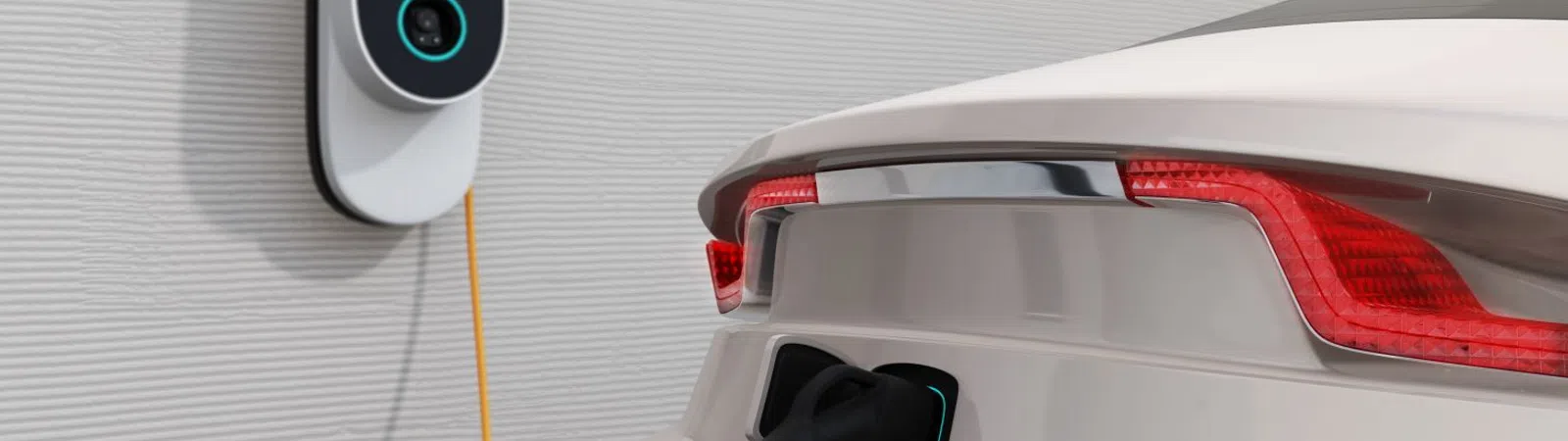
Installing a home EV charger is the difference between waking up to a full battery every morning and having to rearrange your day around public charging stations. For Atlanta-area drivers, a home Level 2 charger adds 20 to 40 miles of range per hour and charges your car overnight on Georgia Power's cheapest rates. This guide covers charger types, actual installation costs, how long the work takes, and how long the equipment lasts, with Georgia-specific incentives and code details that a national buyer's guide can't give you.
The short version: Most Atlanta homeowners install a hardwired or plug-in Level 2 charger. Professional installation typically runs $899 to $3,700 depending on your panel and wiring, usually takes a few hours to a day, and a quality unit lasts 10 to 15 years. Georgia Power offers up to a $150 rebate, and the federal tax credit that used to cover this expired June 30, 2026.
Home EV Chargers Come in Two Types: Level 1 and Level 2
What types of EV chargers can you install at home? Home EV chargers come in two types, Level 1 and Level 2, and the difference is how fast they refill your battery. Almost every Atlanta homeowner who charges daily chooses Level 2, because Level 1 is too slow to keep up with normal driving.
Level 1 (120V) plugs into a standard grounded household outlet and needs no special equipment. It adds roughly 2 to 5 miles of range per hour, which means a full charge can take more than 24 hours. It's fine for a plug-in hybrid or a very low-mileage second car, and it's effectively free to "install" because you already have the outlet.
Level 2 (240V) runs on a dedicated 240-volt circuit, the same class of circuit as an electric dryer or range, and adds 20 to 40 miles of range per hour. That's a full overnight charge for almost any EV. Level 2 is the standard for daily drivers, and it's the charger this guide focuses on because it's what requires professional electrical work.
There's a second decision inside Level 2: plug-in vs. hardwired.
- Plug-in chargers connect to a NEMA 14-50 outlet. The electrician installs the outlet; you can unplug and take the unit with you if you move.
- Hardwired chargers wire directly into your electrical panel. This is generally recommended for the highest-output units (48-50 amp continuous) and for outdoor installations, and it produces a cleaner, more permanent result.
For most homes, either works. If you're pulling maximum amperage or mounting outdoors in Georgia's weather, your electrician will usually steer you toward hardwired.
EV Charger Installation Costs $899 to $3,700 in Metro Atlanta
How much does EV charger installation cost in Atlanta? EV charger installation in metro Atlanta typically costs between $899 and $3,700, with a middle-of-the-road install landing around $1,600. The wide range exists because the charger itself is the small part of the bill, the electrical work is what moves the number.
At Reliable Heating & Air, installation starts at $899 when you supply your own charger, and runs about $2,399 when we supply the hardware, install it, and warranty the work.
Your final cost depends on a handful of factors:
- The charger level and brand — Level 2 units and premium smart chargers cost more than basic models.
- Distance from your electrical panel — the farther the charger is from your panel, the more wire, conduit, and labor the run requires.
- Whether your panel needs an upgrade — this is the single biggest cost variable (more on that below).
- Indoor vs. outdoor mounting — outdoor and detached-garage installs may need weatherproofing or underground runs.
Georgia Power Offers Up to a $150 EV Charger Rebate
Are there rebates for installing an EV charger in Georgia? Yes, Georgia Power offers up to a $150 rebate for installing a qualifying Level 2 charger at a residential address, but there is no Georgia state tax credit for EV chargers. You can take the rebate as an instant $150 when you buy an eligible charger on the Georgia Power Marketplace, or submit a rebate form after installation, not both.
Key rules to know:
- The rebate is available for installations completed on or before December 31, 2026, subject to funding availability.
- You must submit your request within 6 months of the installation date, with your charger and installation invoices.
- You can receive up to two residential charger rebates per account.
- You do not have to be enrolled in Georgia Power's EV rate to qualify.
The Federal EV Charger Tax Credit Expired June 30, 2026
Is there still a federal tax credit for home EV chargers? No, the federal EV charger tax credit expired on June 30, 2026, so it is no longer available for installations completed after that date. If you read older articles promising "up to $1,000 back from the IRS," that information is now out of date.
Here's the history so you're not misled by stale advice: the credit (Section 30C, the Alternative Fuel Vehicle Refueling Property Credit) covered 30% of hardware and installation up to $1,000, and was originally scheduled to run through 2032. The One Big Beautiful Bill Act, signed in July 2025, moved the expiration up to June 30, 2026. Your charger had to be installed and operational by that date to qualify, and no extension has been announced. For any installation happening now, the credit is gone, so plan around the Georgia Power rebate and off-peak charging savings instead.
Off-Peak Charging Cuts Your "Fuel" Cost to Roughly $0.50 a Gallon
Can you save money on charging costs in Georgia? Yes, charging during off-peak hours is where the real long-term savings are, not the one-time rebate. Georgia Power estimates that charging during its super-off-peak period costs roughly the equivalent of $0.50 per gallon of gasoline, versus $3.50+ for a gas car.
Georgia Power offers two residential structures: a whole-home time-of-use plan with a low overnight rate, and a separate EV rate that meters your charging independently. Which one saves you money depends on your household's overall usage, so compare a full year of your electric bills before switching. Setting your Level 2 charger to start after the peak window ends is the simplest way to capture this, as most smart chargers let you schedule it from an app.
Professional EV Charger Installation Requires a Permit and Inspection
What does the installation process actually involve? Professional EV charger installation involves running a dedicated 240V circuit, mounting the unit, and, in most metro Atlanta jurisdictions, pulling a permit and passing an electrical inspection. This is work for a licensed electrician, both for safety and because a failed or unpermitted install can create liability and insurance problems.
A typical Level 2 installation includes:
- Load assessment — the electrician evaluates whether your existing panel can safely handle a continuous 40-50 amp EV load.
- Routing the circuit — running wire and conduit from your panel to the charging location.
- Installing the outlet or hardwiring the unit — a NEMA 14-50 receptacle for plug-in, or a direct connection for hardwired.
- Mounting and testing the charger to confirm it delivers full power safely.
- Permit and inspection, where required by your city or county.
Your Electrical Panel May Need an Upgrade to Add an EV Charger
Will you need to upgrade your electrical panel for an EV charger? Some homes need a panel upgrade to add an EV charger, and some don't, it depends on your panel's size and existing load, and it's the biggest single factor in your final cost. A Level 2 charger draws a large continuous load, and older Atlanta homes on 100- or 150-amp panels may not have the headroom to add it safely.
Your electrician runs a load calculation to determine whether your current panel can accommodate the charger. Many homes can, especially newer ones with 200-amp service. Homes that are already near capacity, or on smaller older panels, may need a panel upgrade (often to 200 amps) before the charger can be added. This is why an in-home assessment matters: a quote given sight-unseen can't tell you which situation you're in.
Most EV Charger Installations Take a Few Hours to a Full Day
How long does it take to install a home EV charger? Most home EV charger installations take a few hours to a full day, with a straightforward job typically finished in about 4 to 5 hours. The timeline depends almost entirely on how much electrical work stands between your panel and your parking spot.
- Straightforward install (panel near the garage, no upgrade needed): often completed in a single visit of a few hours.
- Longer wire runs (charger far from the panel, or in a detached garage): add time for routing wire and conduit.
- Panel upgrade required: this extends the job and may involve coordinating with the utility, so it can push into a longer or second appointment.
- Underground or outdoor runs: trenching and weatherproofing add time.
The honest answer is that the charger mounting is quick; everything around it, including the circuit, the panel, the permit, is what sets the schedule.
A Quality Home EV Charger Lasts 10 to 15 Years
How long does a home EV charger last? A quality, professionally installed Level 2 home charger lasts about 10 to 15 years, and well-maintained units in protected locations can run longer. Cheaper, uncertified units or chargers exposed to harsh outdoor conditions land at the lower end of that range.
Lifespan comes down to a few things: build quality and certification, whether it's installed indoors or exposed to Georgia's heat and humidity, how heavily it's used, and how it's protected from power surges. Chargers rarely fail all at once; instead, the cable, the plug handle, or the internal contactor wear over years of daily cycles. A well-mounted, surge-protected unit from a reputable manufacturer is the version that lasts.
EV Chargers Need Minimal but Not Zero Maintenance
Do home EV chargers require maintenance? Home EV chargers require minimal maintenance, but "minimal" is not "none," and a little attention meaningfully extends their life. There are no fluids to change and no moving parts to service, but a few simple habits keep the unit safe and reliable.
- Inspect the cable and handle periodically for cracks, fraying, or damage, and store the connector off the ground when possible.
- Keep the connection points clean and dry — wipe away dust and debris, and check outdoor units' weather seals.
- Keep firmware updated — most smart chargers update over Wi-Fi and occasionally patch charging or safety behavior.
- Protect against surges — a whole-home surge protector or dedicated breaker shields the charger's electronics from Georgia's lightning-season power spikes.
- Watch for warning signs — frequent charging faults, or a charge that suddenly takes much longer than usual, are cues to have it inspected.
Choosing the Right Charger Depends on Your Driving and Your Home
How do you choose the right home charging station? Choosing the right home charging station comes down to your daily driving distance, your home's electrical capacity, and the features you'll actually use. There's no single "best" charger, as the right one is the one matched to your car and your panel.
Consider three things:
- Your daily mileage — high daily mileage justifies a higher-amperage Level 2 unit that charges faster; a modest commute doesn't need the fastest charger on the market.
- Your home's capacity — the amperage your panel can support caps the charger that makes sense to install.
- Features you'll use — scheduling for off-peak rates is worth having in Georgia; beyond that, decide whether app control and energy monitoring matter to you or are features you'll never open.
Ready to Install a Home EV Charger in Atlanta?
Reliable Heating & Air's licensed electricians have served metro Atlanta since 1978. We'll assess your panel, recommend the right charger for your driving and your home, handle the permit and inspection, and warranty the work. Schedule your free estimate or call (770) 594-9969.
Frequently Asked Questions
Do I need a Level 2 charger, or is Level 1 enough?
Level 1 is enough only for plug-in hybrids or very low-mileage drivers, because it adds just 2 to 5 miles of range per hour. Most EV owners need Level 2 to fully charge overnight.
Is there still a federal tax credit for EV chargers?
No. The federal Section 30C credit expired June 30, 2026, and is not available for installations after that date. Georgia Power's rebate of up to $150 is the incentive still available to metro Atlanta homeowners.
How much does it cost to install an EV charger in Atlanta?
Installation typically runs $899 to $3,700, with most jobs around $1,600. The main cost driver is whether your electrical panel needs an upgrade.
Can I install a home EV charger myself?
A Level 1 charger simply plugs in. A Level 2 charger requires a dedicated 240V circuit and, in most Atlanta jurisdictions, a permit and inspection — this is work for a licensed electrician, both for safety and to keep your installation code-compliant and insurable.
How long will my EV charger last?
A quality Level 2 charger lasts about 10 to 15 years, longer if it's well installed, surge-protected, and not exposed to harsh outdoor conditions.
Costs, rebates, and incentive deadlines referenced above reflect programs current as of 2026 and are subject to change and funding availability. Confirm current Georgia Power rebate terms before purchase.
```
Reviewed for Technical Accuracy By
Gary McCurry
Director of Service, Reliable Heating & Air · 40+ Years in HVAC · With Reliable Since 2017
in the Nation
Google Reviews
Since
200+ Trucks Daily
Georgia Licensed & Insured: HVAC (Conditioned Air) CN210318 · Plumbing MP210023 · Electrical ER102252